This page is under construction. Please submit your information and comments to the Historian.
The following is submitted by Woody Woodward.
|
|
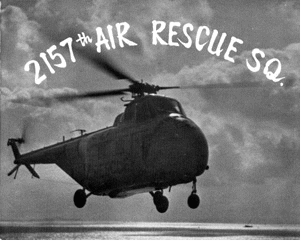
In your history of helicopter outfits, there is no mention of the 2157th Air Rescue Squadron, which was based first at K-16, then K-14, from March, 1953, until April, 1956, at which time it was deactivated and became a detachment of the 39th ARSq.
The 2157th maintained one-ship detachments at K-55 and K-8, and Formosa. Aircraft and crews were rotated to K-55 and K-8 on a monthly basis, while only crews were rotated to Formosa.
I can send more information if you’re interested.
Woody

The 2157th ARS kept one H-19 and crew TDY to K-8, and every month a different helicopter and crew were rotated in. An Army H-19A was also attached to the base, flown by CWO Craig Burroughs, to ferry NNIT's (Neutral Nations Inspection Team) personnel. A few days before being relieved from TDY at K-8, I learned of a missionary hospital located east of K-8; struggling with lack of supplies and primitive equipment. I scrounged everything I could from the base dispensary and the enlisted and officers messes; and we loaded it on the choppers and flew them to the hospital - creating quite a stir there, I might add. While our H-19B's had de-rated R-1300 engines, the H-19A had the less powerful R-1340; so we flew formation on Craig, allowing him to set whatever pace he could.
The NNIT's were each composed of two members from "neutral" Communist nations and two neutral Western nations. The Commies were treated as spies and allowed to see only what was necessary for their mission. Craig flew with his windows covered when carrying them. The westerners mingled freely with the officers but the Commies, carefully watched by their political minder, stayed to themselves.
(See related story in “Experiences”.)
Submitted by Woody Woodward
I graduated in H-19’s from helicopter school at Gary AFB in September, 1954, and was assigned to one of the helicopter squadrons at Sewart AFB, TN. I don’t remember the number of the squadron, but I do know that one squadron there was the 3475h Troop Carrier Squadron, Assault, Rotary Wing. Starting in 1955, these squadrons transitioned to H-21’s.
At the beginning of 1955 I was one of four aircrews and H-19’s sent TDY to Operation Teapot, the above-ground nuclear tests of that year. That was a very interesting assignment.
In’56, the Army won the right to operate its own helicopter squadrons, and subsequently the Assault RW squadrons morphed into special ops squadrons. I was not part of that transition, because when I returned from Korea in June 1956 I was assigned to a C-123 Squadron.
The 2157th Air Rescue Squadron was activated 1 March 1953, at K-16. It moved to K-14 (Kimpo) on 2 January 1955. I joined the squadron in May, 1955, and was with it until it was inactivated 8 April 1956. I was then assigned to the 39th ARSq at Ashiya, which established a detachment at K-14, where I remained until June, 1956. I have no knowledge of the squadron before I arrived; there is only a little information from 1953-1955 available on the internet. This will be a report on my experience with the squadron.
When I arrived, in May of 1955, the 2157th had 8 SH-19B’s and 2 SH-19A’s. One of the A’s and two of the B’s were destroyed in accidents. Two replacement H-19B’s of the later “droop tail” version replaced two of the destroyed ones.
We also had a C-47, which was used for transport, and made one rescue from an island off the west coast.
Here are the details of the accidents, all of which occurred in a period of three months (May – July) in 1955:
SH-19A: The upper drive shaft coupling consisted of two circular plates with a rubber bushing between. When the aircraft was assembled in Japan, workers used bolts that were too long, so that, when tightened to the proper torque, the rubber bushing wasn’t compressed sufficiently. This caused the coupling to fail just as the helicopter was taking off. The drive shaft ran next to the control mixing unit (that mixed collective and cyclic controls), and as it whipped around, it wiped out the mixing unit. The helicopter rolled and crashed on its side. No injuries.
The next accident was pure pilot error. For trim and balance reasons, the aft fuel tank had to be burned off first, and the pilot forgot to shift tanks. He autorotated successfully, but upon landing, the nose wheels fell into a ditch, causing him instinctively to pull back on the stick, and the unloaded rotor blades chopped off the tail.
The third accident was mechanical failure, and it happened to me. It was a terrible example of a chain of errors, any one of which, if corrected, would have prevented the accident. The hydro-mechanical clutch was held in gear by three flyweights. This particular clutch, along with about a dozen others, was improperly overhauled at the SHOWA facility; a mechanic misread a specification and turned (on a lathe) the flyweight shafts to an insufficient thickness. All of those clutches were accidents waiting for a time and place to happen, and what we called an ALCOM TWX – a message to all commands – was sent to every unit using H-19B’s. The message contained serial numbers of the defective clutches, and the instruction that, wherever found, they were to be returned to SHOWA immediately. If installed on an aircraft, the replacement was to be made wherever it was when the faulty clutch was detected. That meant even in the middle of a Korean rice paddy, if necessary.
One of those clutches was in FEALOGFOR, the logistics depot in Tachikawa, where it was missed and sent to K-14 base supply, where it was missed and sent to 2157th Squadron Supply, where it was missed and sent to Tech Supply, where it was missed and issued to maintenance. The mechanic who installed it was OJT (on-the-job training), so he had an instructor overseeing the work – both of them missed it. Finally, an inspector signed off on the work, and missed it.
I was flying my final check ride for qualification as a Rescue Crew Commander, and the last maneuver to be performed was a maximum performance takeoff. In this maneuver, the aircraft is outside the safe airspeed/altitude combination for autorotation while between 25 feet and 425 feet altitude; and it was at about 200 feet when the clutch failed, causing an inevitable accident. The blame was divided between the commanders of FEALOGFOR, K-14, and the 2157th.
The 2157th, as an all-helicopter squadron, was completely unlike other Air Rescue Squadrons, which typically were equipped with Grumman SA-16 amphibians, with only one helicopter. This was evident by its four-digit number; whereas other Rescue squadrons had two-digit numbers. We felt like outcasts from the normal Rescue organization.
In addition to our home base at K-14, we had detachments at K-55 and K-8. These consisted of one helicopter and crew of pilots and medic, plus a mechanic, which rotated every month. Another detachment, at Tainan, Formosa, was rotated every three months. One pilot was also on duty at all times as Rescue Coordinator at the Rescue Control Center at K-55; this duty also rotated monthly.
In addition to training, we flew two types of rescue missions:
Recovery of downed pilots. Since the armistice was in effect, this was extremely rare; I know of only two instances in the 13 months I was there. In the one recovery incident that I flew, an F-86 pilot ejected through a stuck canopy; and though he successfully opened his parachute, he was dead from a broken neck when he landed. . One of our T-6 observer planes strayed across the DMZ and was shot down, its observer was killed and the pilot immediately captured; no rescue mission was flown. He was subsequently released.
Medical evacuation. We flew numerous medical evacuations to the 121st Evacuation Hospital at ASCOM City. One that I flew involved a spy from the 6006th Air Intelligence Squadron – see below.
A non-rescue mission was also assigned to us because we had the only operational USAF helicopters in Korea, support of the 6006th Air Intelligence Squadron. Under Col. Donald Nichols, that squadron trained and controlled a network of South Korean spies operating in North Korea and we were sometimes involved in insertion and extraction of them. It was interesting work.
Although the Armistice had been in effect for over two years, in 1955 there were apparently still guerillas, or maybe criminal gangs, in the area and every two weeks or so there would be gunfire directed at the K-14 base perimeter.
During the last six months or so of the squadron’s existence, maintenance had a very difficult time keeping our aircraft flying due to a shortage of parts. We frequently had multiple aircraft AOCP (Aircraft Out Of Commission, Parts), and occasionally we had no aircraft available for alert duty.
When I arrived in May, 1955, I was one of 11 replacement pilots. One was a first lieutenant; the rest of us were all second lieutenants less than a year out of helicopter school. We started as co-pilots but because a number of pilots were to be rotated out in a few months, we had to be trained quickly as First Pilots and Rescue Crew Commanders. There weren’t enough instructor pilots in the 2157th to handle the load, so some of us were “farmed out” to Rescue squadrons in Japan. I was fortunate enough to be sent for a month to the 36th ARSq at Johnson AB, Tokyo, where I was trained by the 3rd Air Rescue Group standardization pilot. Six months later, I was so senior in the squadron that I was put on orders as an instructor pilot and maintenance test pilot.
Aircraft reliability was a major problem, and I had five incidents in addition to my accident. Two involved flight control problems, and two involved small fires. In one of those, an oil return stud came loose, spraying oil on the exhaust pipe. It was on a ferry flight to rotate crews at K-8, so there was a mechanic on board. We landed in the middle of nowhere, and there was no response to our calls on guard channel, so our mechanic set to work while the copilot, medic, and I set up an uneasy defense triangle. Numerous Korean farmers came to watch, and we were nervous that there might be bad guys among them. The mechanic made a temporary fix by wrapping string around the threads of the stud, and it held long enough to finish the flight to K-8. On the fifth incident, I had a partial engine failure – one cylinder failed – and made an emergency landing at K-14.
After the 2157th was deactivated, K-14 became a detachment of the 39th ARSq in Ashiya, and I remained there until my tour was over at the beginning of June.
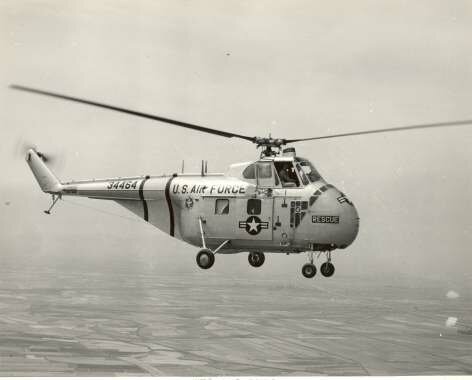
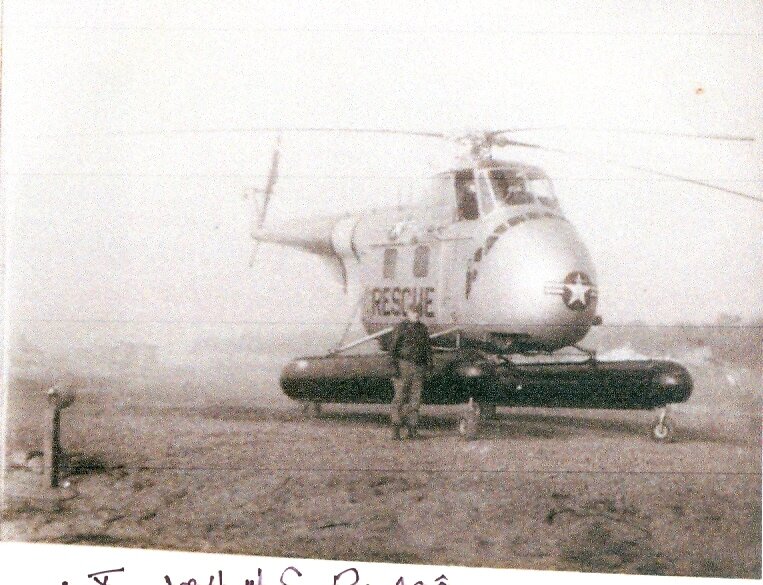
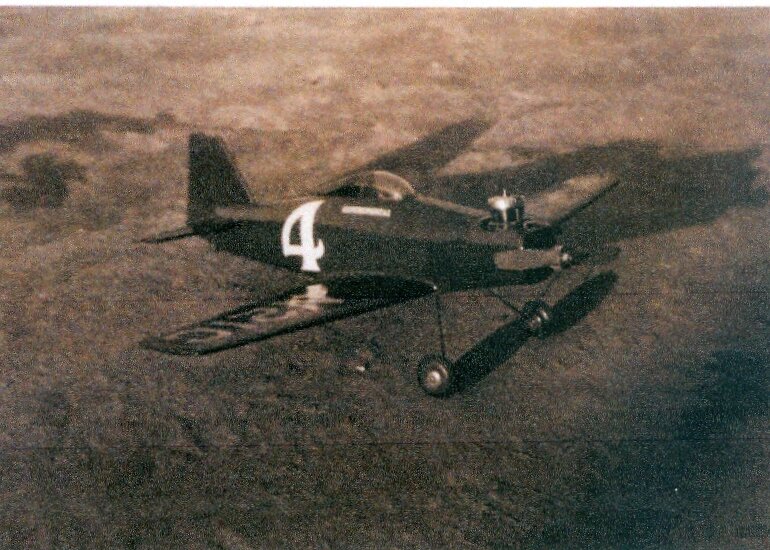
I’ve attached a photo of the newest H-19 we had; note that the tail is drooped about 3 degrees for better blade clearance in an autorotation. Also, the fins on the tail are horizontal, not in an inverted “V” as in older H-19’s. It was a better-flying machine.
|
|
Four years ago, Tony Santore, a medic with the 2157th, had a web site about the squadron; and I’m enclosing a roster from that site. I lost all contact with him several years ago, and I think he must have died.
I’ll be sending an additional email soon with additional attachments.
Regards,
Woody
|
|
The 2157th Air Rescue Squadron, originally based at K-16 (Seoul City Air Base) moved to K-14 (Kimpo Air Base) on 2 January 55. Running water and flush toilets easily led the list of benefits of the move!
When the Truce was signed on 27 July 1953 to end most of the fighting in Korea, it was an H-19 of the 2157th which took Admiral Briscoe to Munsan for the signing ceremony.
Major Emerson E. Heller, a native of Spring City, Pennsylvania, served as C.O. of the 2157th as part of a distinguished military career. He flew 31 combat missions in the B-17 over Europe with the 303rd Bomb Group in England. After that, he served a tour with Flight C of the 1st Air Rescue Group at Ramey Air Force Base, Puerto Rico. From June 1951 until July 1952, he was Commander of Detachment #1, 3rd Air Rescue Group, and flew 74 combat missions in the H-19. Along with his 105 combat missions, which would be distinction enough, he was awarded the Distinguished Flying Cross, the Air Medal with 6 Oak Leaf Clusters, and several other decorations. And he was arguably the best helicopter pilot in the world.
He returned to his former Squadron, now the 2157th, in 1955 as C.O., which post he held until the 2157th was deactivated in 1956 and incorporated into the 39th.
The typical monthly complement during 1955 was approximately 23 officers and 75 airmen.
The 2157th maintained helicopter elements at K-55, K-8, K-16, and Formosa. The 2157th took over the rescue detachment at Tainan Air Base on Taiwan on 1 October 55, using H-19B # 52-7481. The element consisted of two pilots, one crew chief, one aircraft mechanic, and one aeromedic.
The 2157th was inactivated on 8 April 56, the helicopters going to the new 60th Air Rescue Squadron, and most of the personnel going to the 39th, with some to the 60th.
AIRCRAFT:
C-47D # 43-48957 - 1955
H-19A # 51-3271 - 1955
H-19A # 51-3873 - 1955
H-19A # 51-3886 - 1955
H-19A # 52-7483 - 1955
H-19B # 52-7481 - 1955
H-19B # 52-7497 - 1955
H-19B # 53-4463 - 1955
H-19B # 53-4464 - 1955


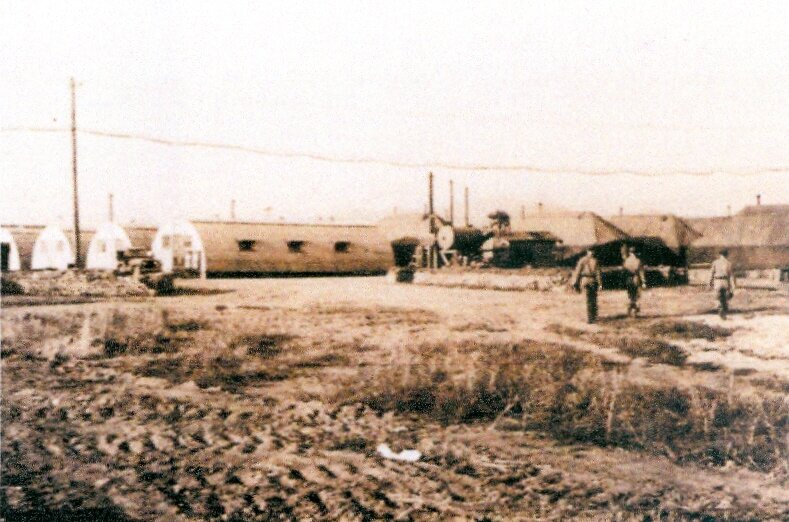
K-14, The rescue area, front
K-14, The rescue area, rear


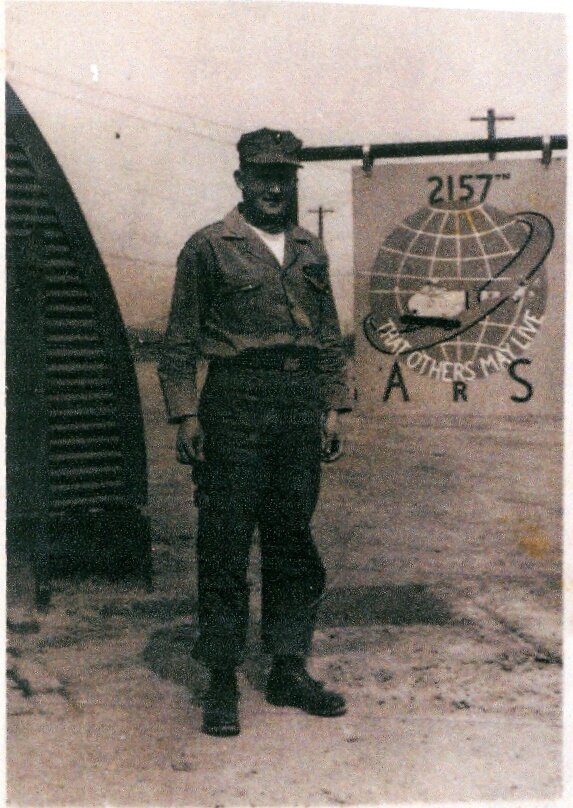
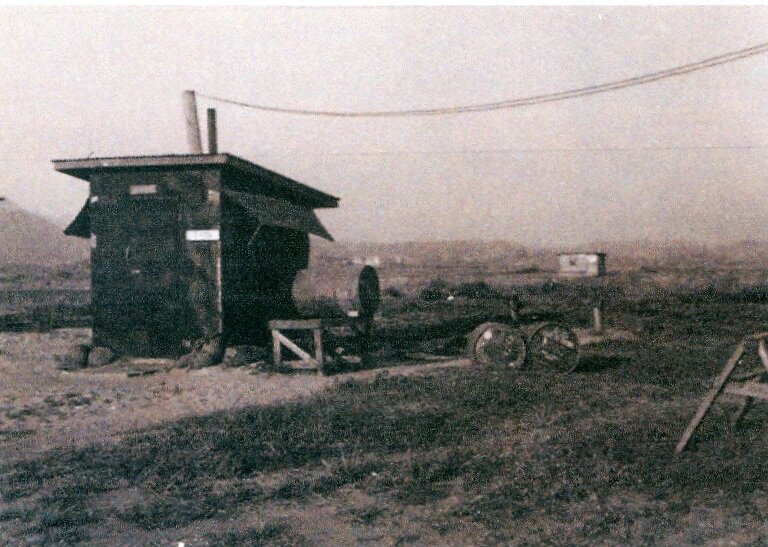
The quonset hut at K-55
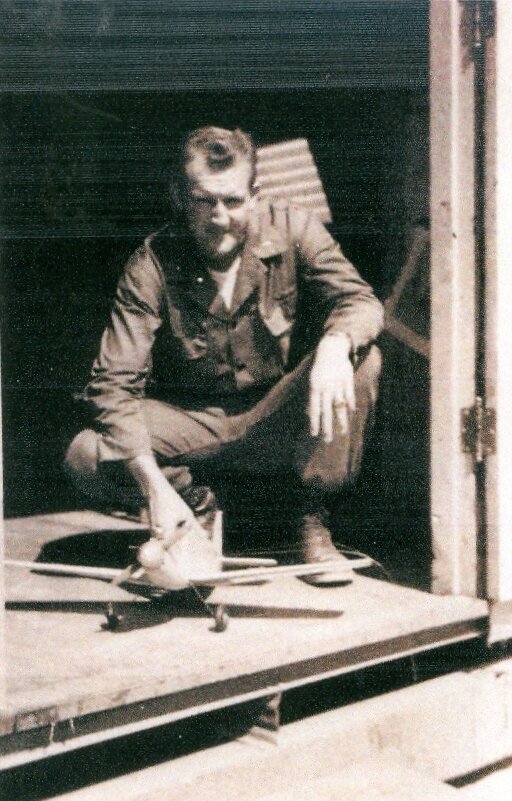
The following photos are submitted by John S. Rivers:
|
|
|
|
|
|
|
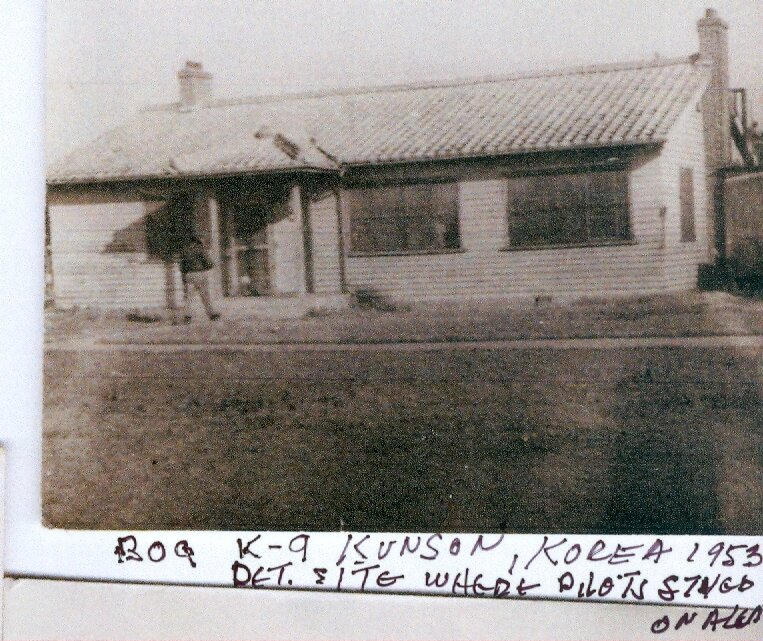
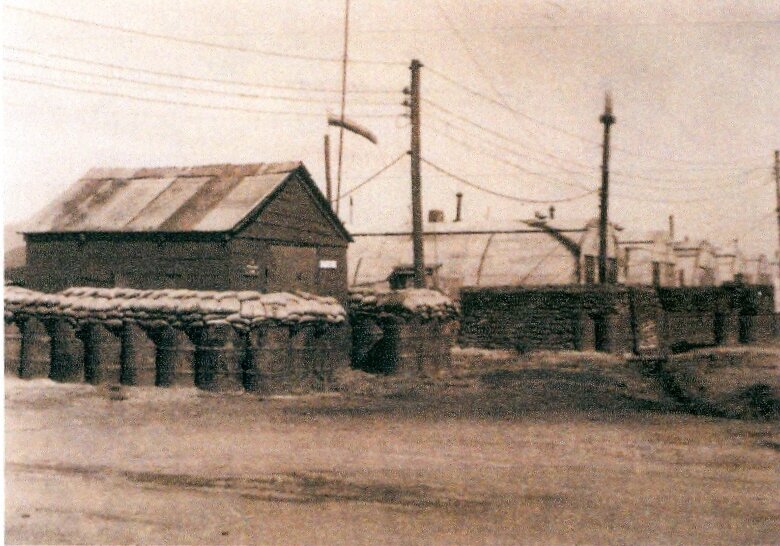
Kunson, Korea 1953 |
|

|
|
|
|
|
Far East Air Force Korean airfields (K-sites)
During the Korean War, the large number of locations used for bases and the similarity of some geographical names prompted the Air Force to use alphanumeric identifiers for bases in addition to their proper designations. Under this system, each base in Korea received a "K number," simplifying positive identification when referring to the various bases.
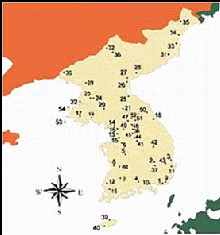

USAF airfields in Korea 1950-53.
These are the known bases that the U.S. Far East Air Forces operated during the Korean War. The place name spellings used are those found in Fifth Air Force general orders designating the K-Sites and other official Fifth Air Force documents.
|
· K-1 Pusan-West · K-2 Taegu (Taegu #1) · K-3 Pohang · K-4 Sachon · K-5 Taejon · K-6 Pyongtaek · K-7 Kwangju · K-8 Kunsan · K-9 Pusan-East · K-10 Chinhae · K-11 Urusan (Ulsan) · K-12 Mangun · K-13 Suwon · K-14 Kimpo · K-15 Mokpo · K-16 Seoul · K-17 Ongjin (Oshin) · K-18 Kangnung (Koryo) · K-19 Haeju (Kaishu) |
* K-20 Sinmak · K-21 Pyongyang · K-22 Onjong-ni · K-23 Pyongyang · K-24 Pyongyang East · K-25 Wonsan · K-26 Sondok · K-27 Yonpo · K-28 Hamhung West · K-29 Sinanju · K-30 Sinuiju · K-31 Kilchu (Kisshu) · K-32 Oesichon-dong · K-33 Hoemun (Kaibun) · K-34 Chongjin (Seishin) · K-35 Hoeryong (Kainsei) · K-36 Kanggye · K-37 Taegu #2 |
· K-38 Wonju · K-39 Cheju-do #1 · K-40 Cheju-do #2 · K-41 Chungju · K-42 Andong #2 · K-43 Kyongju · K-44 Changhowon-ni · K-45 Yoju · K-46 Hoengsong · K-47 Chunchon · K-48 Iri · K-49 Yangsu-ri · K-50 Sokcho-ri · K-51 Inje · K-52 Yanggu · K-53 Paengyong-do · K-54 Cho-do · K-55 Osan-ni |